I grew up in South African townships with my most immediate idea of farming being allotments where our neighbours grew seasonal crops, and loosely kept cattle, sheep, goats and other livestock. Those small farms were at the edges of our neighbourhoods, that were themselves at the edges of the cities that my family lived in. The farms were typically alongside the open spaces that we, as a community, fashioned into soccer fields, playgrounds, parks and other amenities. As children, we snuck in and out of them to fill our makeshift pots made of tin cans, with meals we cooked over open fires.
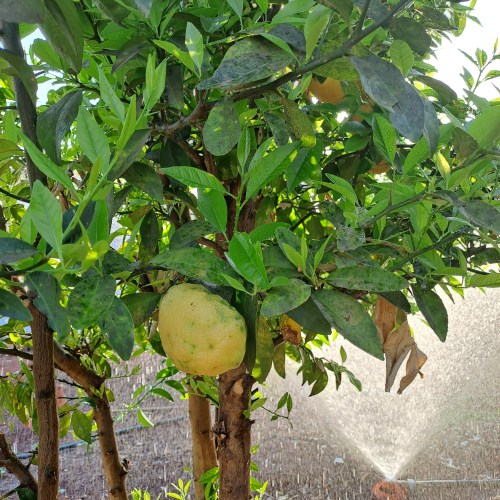
In an unsurprising nostalgic yearning for the certainty of bygone times, in my thirties I started an urban farm on the property I was renting in a Johannesburg suburb. I poured myself into a strip of neglected land over five years. The crops I grew were laughably scraggly, and scant. To add schmaltz to nostalgia, I convinced myself that I was the crop, not the maize, spinach, beetroots, tomatoes and other crops. The satisfaction I got from regenerating soil, planting, tending, harvesting, preparing and finally eating some of my food was incomparable.
Meanwhile, in my career, the cost-to-benefit of success began to resemble a burnout-to-bonus ratio. It was then that I made my most foolhardy decision yet— I listened to my mother. She was leagues ahead and had retired on a plot of land on the rural outskirts of Pretoria. I packed up my things and went to help her make business of the handful of hectares that she had been valiantly regenerating into a Black-owned organic farm.

A job in diplomacy in the city where her and I were born and still consider home provided soft landing for me to adjust to this new life. And when my employment contract was not renewed, which became commonplace in my profession ahead of Trump’s presidency, I saw it as an opportunity to farm full-time. “It will only be for a few months,” I persuaded myself. “It will also give you a chance to write, curate, photograph on your own terms.” It is close to a year on and I have done those things. But that is not where I found the most valuable lessons. As I did when I learned by playing in fields, close to rivers, in the open spaces of South Africa’s townships, I have found my greatest lessons outdoors, where I feel the most free. Here are five lessons I’ve picked up as a first generation Black farmer that, with a little imagination, could be helpful in other environments too.
1. Living things want to grow, help them
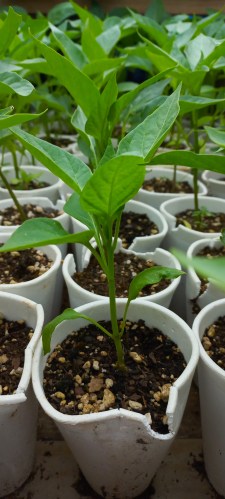
Reduced to their most basic level, living things are made to survive and reproduce themselves. Organic farming is working with nature’s processes instead of against them. Great as my efforts might be, they have limits where nature and the environment take over. This has allowed me to relinquish a false sense of control. With this in mind, we focus on making sure that the things we want to survive and reproduce do, and the ones we don’t don’t.
2. You cannot do it alone
There is a deep sense of accomplishment buried in seeing something from start to finish. Working outside of the material world robbed me of this. Collaboration in the creative, immaterial world meant generating ideas that I handed over to others to bring to life. This left me with a dopamine deficit in my work. But however satisfying, my reclaiming of processes became a preoccupation that has stunted key projects. Farms are generations of people holding hands with nature and each other across time.
3. There will always be a bigger farm
The economies of scale that make a farm profitable have traditionally tipped in favour of producing more on more land. Some of the world’s largest economies saw production and consumption shift in favour of producing less, at higher quality, on less land. This trend is likely to spread to the global South. We apply the sustainability ethos of organic farming to the process of developing the farm. We use the land that we have to its highest potential, and every piece of organic and inorganic material as best we can.
4. Let the right tool do the work

In kobudo, traditional Japanese weaponry, it is said that one should guide the weapon to do your bidding. Similarly, working with basic farming implements has taught me that the right tool does most of the work. Mine is to correctly channel the weight, length and other qualities of the tool in the furtherance of the work as efficiently as possible.
5. Plan for your greatest blunder, and prepare for your unimaginable success
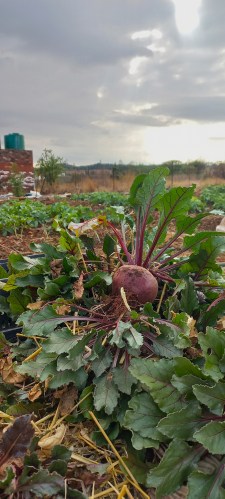
The likelihood of us succeeding as Black first generation organic farmers is very small. I have embraced this in everything that we do for the first few years of operating. Once the cost of botching the whole thing is calculated and manageable, it creates a space for experimentation and fun within set guidelines. As industries and sectors in the global South change in the short-to-medium term, we must always remember that blunder is knowledge generation. And equally as importantly, the opportunities for success that this knowledge gives us could lead to success beyond our most fantastical imaginings.
 Setumo-Thebe Mohlomi